
Without doing enough research, we approved the “phantom” council—HoS
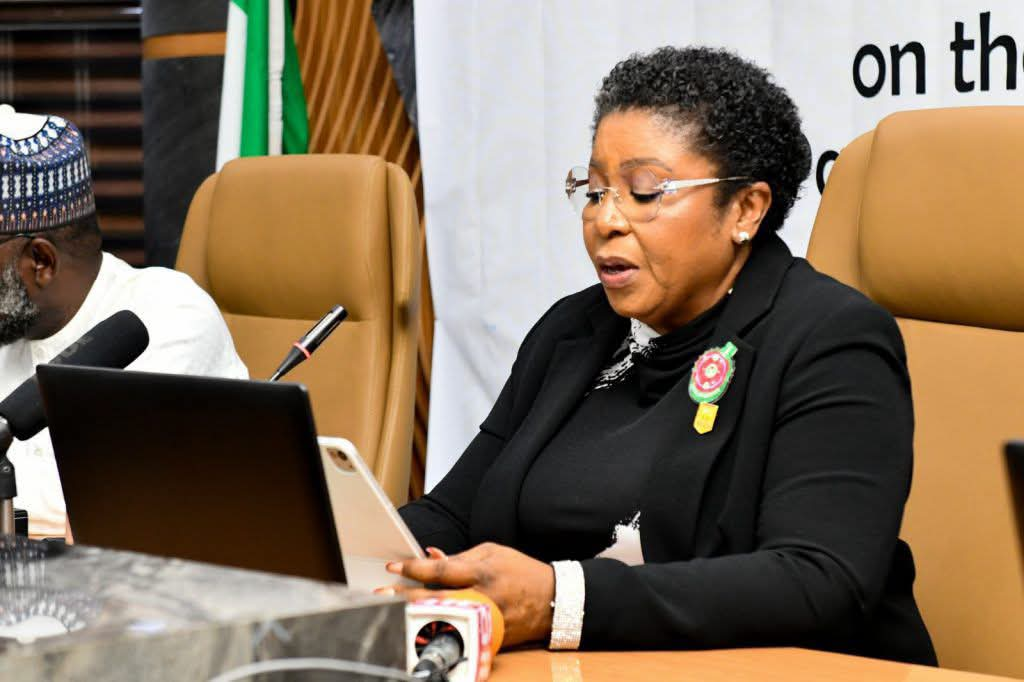
Mrs. Didi Esther Walson-Jack, the Federation’s Head of the Civil Service (HoS), informed the House of Representatives Ad Hoc Committee looking into the Presidential Foreign Investment Promotion Council (PFIPC) yesterday that her office granted the “phantom” council a “authorized establishment” based on submitted documents.
An organization that has received administrative authority from a relevant government entity to operate or carry out particular operations after fulfilling certain legal or regulatory conditions is referred to as an authorized establishment.
According to Walson-Jack, the documents contained an alleged Act creating the fictional council as well as a purported letter of appointment for Prince Adeniyi Adeyemi, the director-general.
However, she acknowledged that adequate diligence would have disclosed the documents, pointing out that they were eventually found to be fraudulent after an internal assessment prompted by the House investigation.
She told MPs, “When this matter came up, I asked to see the documents myself and discovered that the establishment Act was not really an authentic Act.”
The committee is looking into how the PFIPC was able to obtain office space in the Phase III Federal Secretariat and earn an allocation of more than N1.3 billion in the 2026 Appropriations Act.
Adeyemi responded by characterizing the PFIPC as “a cloud of public misrepresentation, institutional denial and a deliberate attempt to silence legitimate questions that concern matters of national interest” to the President’s Chief of Staff, Femi Gbajabiamila, who had issued a disclaimer denying its existence.
As a result, on July 1, the President’s Special Advisor to the President on Information and Strategy, Bayo Onanuga, declared that Adeyemi was a “con artist” and that a criminal charge had been brought against him by the police.
However, the statement made no mention of the disputed council’s inclusion in the budget or the N400 million that Adeyemi allegedly gave Gbajabiamila through a proxy in order to make his appointment possible. The former Speaker of the House of Representatives filed a N15 billion slander lawsuit and denied any connection to the troubled DG.
Findings also showed that Adeyemi opened domiciliary accounts with the Central Bank of Nigeria (CBN) and received approval to hire 300 employees.
The Office of the Head of the Civil Service of the Federation (OHCSF) regularly processes requests from newly established agencies upon presentation of an enabling Act and letters of appointment, according to Walson-Jack, who appeared before the committee chaired by Rep. Yusuf Gagdi (APC, Plateau) on Wednesday. She added that officials acted on the documents submitted by PFIPC representatives.
“Mr. Chairman, to put it another way, we are stating that my office received the Establishment Act and the letter of appointment, and we issued the authorized establishment and later the Recruitment Waiver based on those documents as well as our interactions with the PEAC and PFIPC representatives.
“We now, having seen all the facts and observed all the documents, concede that we ought to have carried out more due diligence in the discharge of the duties of the office in issuing an Authorised Establishment and a Recruitment Waiver to the PEAC/PFIPC,” she said.
Walson-Jack explained that the Presidential Economic Advisory Council, which had existed as an ad hoc body, might have contributed to the confusion.
“We do know that the PEAC used to exist as an ad hoc organisation on its own, and the documents that were presented had PEAC/PFIPC. However, as I said, due diligence may have detected whether those documents were actually authentic,” she added.
The HoS said all approvals earlier granted to the PFIPC had been withdrawn following the discovery that the documents were not genuine.
However, the committee questioned why the OHCSF did not identify the purported fake prior to issuing formal permits.
Panel: The Chief of Staff’s signature was fake
During the hearing, Gagdi urged the Head of Service to compare the signatures on what he claimed to be genuine correspondence from the Office of the Chief of Staff to the President and the PFIPC’s appointment letter.
Responding, Walson-Jack acknowledged the discrepancies.
“I can clearly see that the signatures are not the same,” she said.
Gagdi said a forensic examination earlier conducted by the Nigeria Police Force had also established that the signatures did not match.
He said the findings showed that the appointment letter was not merely forged but entirely fabricated.
“If something is forged, there will be an attempt to imitate the original signature. In this case, there was not even an attempt. The signatures are completely different,” he said.
The lawmaker further told the committee that the purported Act establishing the agency lacked the basic features of a valid Act of the National Assembly, including an Act number, gazette number, gazette title and other statutory identifiers.
“The Act presented to government institutions was totally mutilated. It has none of the features of a genuine Act of the National Assembly,” Gagdi said.
He claims that the committee has determined that the alleged establishment Act and the appointment letter that government institutions relied on were fraudulent.
He continued by saying that the OHCSF had admitted the error in its internal procedures and had taken action based on the strength of the papers that were provided to it.
After instructing the HoS to provide an updated written document to support its investigation, which is anticipated to result in a report to the House, the committee later dismissed her.
“DG obtained the State House verification letter from OAGF.”
The committee added that Adeyemi personally picked up a verification document from the Office of the Accountant-General of the Federation (OAGF) intended for the State House. The information was disclosed when OAGF representatives appeared before the committee. The officials informed legislators that the OAGF wrote to the State House’s Permanent Secretary to confirm a request for an administrative code that was allegedly made by the State House before proceeding.
However, Gagdi claimed that because the response never made it to the State House, the verification procedure was jeopardized.
Rather, he claimed, the letter was picked up from the OAGF by the same person who had asked for the administrative code on behalf of the alleged agency.
“The same self-appointed Director-General wrote a letter using a non-existent directorate in the State House requesting an administrative code. Your office replied, but instead of allowing the letter to get to the State House, the same person came and collected it. How does that happen?” Gagdi asked.
The committee’s inquiry revealed, according to the chairman, that the letter requesting the administrative code was fabricated and made reference to a Directorate of Administration and Support Services that does not exist within the State House.
Additionally, he stated that the Presidency was unaware of Akambi Adewale, the alleged signatory of the letter.
Gagdi claimed that the administrative code was an essential prerequisite for handling financial allocations, cautioning that improper verification allowed the purported fraud to spread through government agencies.
However, rather than attributing the incident to a systemic breakdown inside the office, the OAGF officials regarded it as an individual error by the person handling the correspondence.
Police request a court warrant after failing to deliver Adeyemi.
Adeyemi was not brought before the committee by the Nigeria Police Force on Wednesday. Instead, police officials informed the committee that before they could follow the House’s order, they would need a court order approving the suspect’s release from custody.
The Inspector-General of Police (IGP), Olatunji Disu, was instructed by the committee on Monday to bring Adeyemi before the legislators by Wednesday at noon in order to support the ongoing inquiry.
But when the committee met again, the police told the MPs that Adeyemi was being detained on a legitimate court remand order and could not be hauled before the panel without the court’s approval.
The police clarified that compliance with the committee’s directive must not clash with the current legal order, even though they remained dedicated to assisting with the House probe.
In order to produce the suspect without going against the remand order, they asked the committee to provide the necessary formal legal authorization or court-backed warrant.
Next week, the report is due.
According to the committee, it has discovered a significant example of document fraud and will wrap up its inquiry after completing final verification with the remaining government entities.
Speaking to reporters at the end of Wednesday’s hearing, Gagdi stated that the panel had made great strides since receiving input from important government agencies involved in the issue.
He stated that because Adeyemi is still detained under an ongoing court order, the committee was unable to speak with him directly. He added that the panel has respected the legal system while carrying out its probe.
According to Gagdi, the documented evidence that has been gathered thus far indicates widespread falsification, including the establishment and operation of a fictitious Directorate of Administration and Support Services under the State House, which the committee’s research revealed to be nonexistent.
In order to resolve any residual difficulties and guarantee that all parties were given a fair hearing, he continued, the committee would conduct additional internal verification of the documents and hold cross-check sessions with the other agencies.
“The committee has uncovered what appears to be an extensive act of document fraud. We will conclude the investigation phase by conducting follow-up sessions with the remaining agencies to consolidate our findings and ensure due process is observed,” he said.
He said that the committee will give a thorough report to the House of Representatives for legislative action after briefing the public on its findings the following week.
In the sake of justice, accountability, and the preservation of public institutions, he reiterated the committee’s dedication to carrying out what he called a comprehensive, unbiased, and transparent investigation.
CSOs warn of increasing fraudulent agencies and request an audit of MDAs.
A nationwide audit of federal ministries, departments, and agencies (MDAs) has been demanded by the Centre for Democracy and Development (CDD), which has cautioned that the ongoing investigation into the PFIPC may not be an isolated instance.
In an interview with Daily Trust on Wednesday, CDD Director Dr. Dauda Garuba stated that the country’s verification and clearance procedures had major flaws because many government agencies had acted on fake documents.
“It is not impossible because what Nigeria has become is a place where what people before now would call impossible are now happening,” he said when asked whether other fake agencies could be operating within the government.
According to Garuba, the controversy highlighted the necessity of strengthening verification procedures and streamlining government entities in order to stop future incidents.
He claimed that Nigeria’s growing bureaucracy had made room for misuse and that, in addition to resolving the current issue, the government should reconsider efforts to harmonize overlapping agencies.
“We need a very lean government. Over time, departments, agencies, panels and committees have continued to spring up until they become institutions that drain government resources,” he said.
He argued that the Chartered Institute of Forensic and Certified Fraud Investigators of Nigeria should conduct an independent forensic audit of government agencies. He claimed that the organization could assist in confirming the legitimacy of current institutions and identifying those that were either illegally established or had outlived their usefulness.
Calling the PFIPC controversy “a scandal of international standing,” Garuba also called on the government to make sure those found guilty were held responsible.
“If you have identified something wrong, whether done in error or deliberately, the government should do the needful. It is also necessary that a serious investigation be carried out and those found culpable should face the music,” he said.
In a similar vein, Auwal Musa Rafsanjani, Executive Director of the Civil Society Legislative Advocacy Centre (CISLAC), claimed that the purported fake council had shown serious weaknesses in Nigeria’s public sector verification and clearance system.
He pointed out that the justifications offered by government agencies for their actions were indicative of a larger issue of institutional integrity.
He claims that both domestically and abroad, trust in Nigeria’s governmental institutions has been damaged by the crisis.
“This has further deepened the absence of institutional integrity, institutional independence and institutional responsibility. Our public institutions are now facing credibility questions because of the way this matter was handled,” he said.
He contended that the dispute might harm Nigeria’s standing abroad and that foreign businesses and governments might be wary of doing business with Nigerian public institutions.
Rafsanjani insisted that only a reliable investigation would rebuild public trust and asked for an impartial, open, and transparent examination into the issue.
“If the government allows an independent and transparent investigation, Nigerians and the international community will regain confidence in our institutions. But any attempt at a cover-up will only deepen the damage,” he said.
Rafsanjani urged the government to conduct a thorough audit of MDAs and cautioned that the PFIPC’s operation might not be a unique instance.
He claimed that the putative council’s alleged infiltration of government systems, including budget records, raised the possibility of more dubious organizations functioning in the public sector.
“For a fake agency to find its way into the CBN portal and the federal budget means there could be more agencies that are either non-existent or dormant but continue to receive public funds,” he said.
In order to find any organizations functioning without the necessary legal support, he encouraged the government to thoroughly examine its current agencies.
Rafsajani stated that public officials in nations with robust accountability mechanisms would resign for such failures and urged senior public officials connected to the council’s approvals to accept responsibility for the issue.
He urged the HoS, the Director General of the Budget Office, the Accountant-General of the Federation, and National Assembly representatives in charge of the budget process to take accountability.
“In a decent country, those responsible for these lapses would resign and apologise to the nation. Accountability is necessary if we want Nigerians and the international community to regain confidence in our public institutions,” he said.
He maintained that holding public officials accountable would send a strong signal that abuses of public institutions would no longer be tolerated.
Political analyst Jide Ojo described the unfolding PFIPC scandal as evidence of deep-rooted institutional corruption, arguing that the alleged mastermind could not have operated without the backing of influential insiders within the government.
Ojo said the ease with which the purported council secured recognition from several government institutions suggested the existence of “enablers and facilitators” within the public service.
“I do not believe he acted alone. What I could deduce is that this is an institutional corruption issue. There are enablers and facilitators within the corridors of power,” he said.
He claimed that the integrity of internal control mechanisms was seriously called into question by the alleged undetected passage of documents through government agencies like the Central Bank of Nigeria, the Office of the Accountant-General of the Federation, the Budget Office, and others.
He also voiced worry that the government might still be home to other fictional organizations.
Ojo insisted that the House probe should identify public officials who may have enabled the alleged fraud in addition to proving that falsified documents were used.
“The point is that the guy could not have navigated that space without having some enablers within the system. The challenge is to identify them and bring them to account,” he said.
He added that while the House committee had made significant findings, those responsible for enabling the alleged fraud should also be investigated and prosecuted if found culpable.