ATIKU’S BORDER CLAIM: WERE THE BORDERS CLOSED?
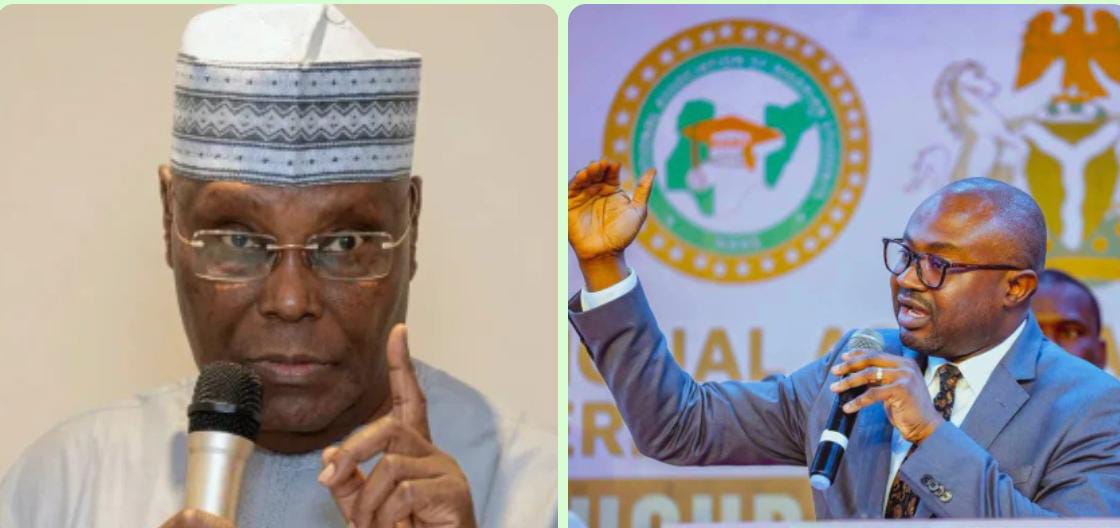
Former Vise President Atiku Abubakar’s remarks regarding his intention to reopen Nigeria’s land borders if elected President in 2027 have garnered attention.
It is convenient to argue that Nigerian borders are not closed and hence cannot be reopened, as the Minister of Interior oversees the Nigeria Immigration Service, a government body in charge of border and migration management.
The former administration reopened Seme, Illela, Maigatari, and Mfum on December 16, 2020, with the remaining locations to follow. Under the present administration, Idiroko and Ikom reopened for business on April 20, 2022, while Kamba and Tsamiya in Kebbi State followed in February 2026, connecting to the Niger Republic and the Benin Republic, respectively.
The former Vice President named Cameroon, Chad, Niger and Benin Republic specifically. The prolonged closures on the Cameroon border, at Banki and Amchidé, did not arise from the 2019 trade policy at all. They date to 2014, when Boko Haram forced their closure for security reasons, and reopened in 2019, with Fotokol and Gambaru following in 2021, after joint military and stabilisation efforts by Nigeria, Cameroon, Niger and Chad. Folding this separate, security driven history into one continuous 2019 shutdown misrepresents two distinct issues, trade regulation and counter insurgency, as a single failure
Today, not all northern crossings are completely unrestricted. Since reopening ahead of the security situation would put traders and border towns at greater risk, stricter restriction is a conscious security decision rather than negligence when banditry or residual insurgency activity persists.
Modern border management necessitates security, documentation, customs compliance, and limited commerce facilitation in addition to complete closure and free transit.
Rewriting recent history should not be the goal of political rivalry. Instead of presenting distinct commerce, security, and infrastructure challenges as one and the same, he should outline his new border concept and explain how it differs from the existing strategy.
Hon. Olubunmi Tunji-Ojo
Minister of Interior
Federal Republic of Nigeria
August 29, 2026