Headline:“$
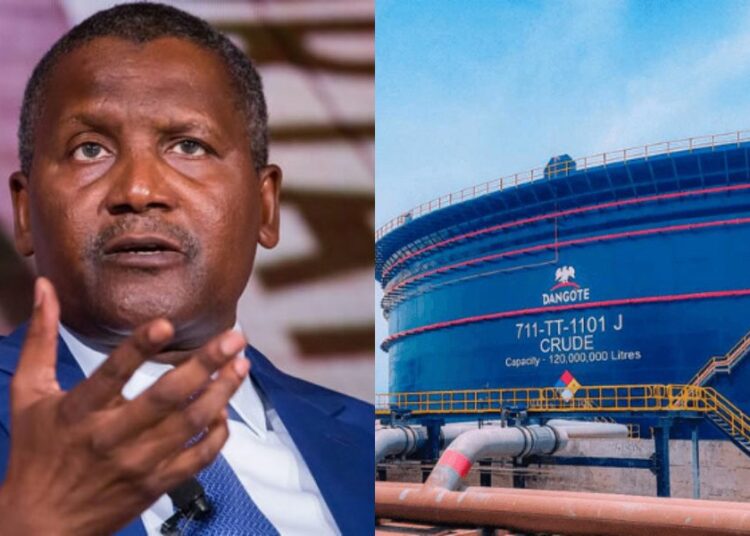
Aliko Dangote, the President of Dangote Group, has raised serious doubts about the likelihood of Nigeria’s state-owned refineries in Port Harcourt, Warri, and Kaduna ever functioning again. According to him, these facilities have consumed some $18 billion under NNPC management yet remain non-operational — and he is highly skeptical they will ever work .
Speaking in Lagos while showing Global CEO Africa participants from Lagos Business School around his own 650,000 barrel-per‑day refinery in Lekki, Dangote compared attempts to rehabilitate the old NNPC refineries to trying to modernize a decades‑old car: “Even if you change the engine, the body will not be able to take the shock of that new technology engine.” His facility commits over 50% of its output to petrol (PMS) — more than double the mere 22% that NNPC refineries ever managed .
He recounted how he initially purchased the government refineries under former President Obasanjo’s administration in January 2007, only to return them after a change in government under Yar’Adua. Dangote asserts that those who handled the deal misled Yar’Adua into believing the facilities could be rehabilitated, despite their escalating dysfunction .
His views echo remarks made by former President Olusegun Obasanjo, who last year also criticised NNPC’s inability to revive the refineries. Obasanjo revealed that international firms like Shell had declined to manage the facilities and described the refurbishments as financially futile — suggesting that in a functioning legal system, those responsible should face prosecution .
Following brief declarations by NNPC’s Group Managing Director Mele Kyari in late 2024 that the facilities were operational, the Port Harcourt refinery was shut down six months later and Warri shortly after its reopening — further undermining confidence in their viability .
Critics and industry players are now intensifying calls for outright privatisation or sale of the state-run refineries as scrap, arguing that modular, privately-led facilities would be more efficient. Dangote’s own successful refinery is cited as a contrast — one built largely with private capital, now efficiently producing refined fuel for domestic consumption .