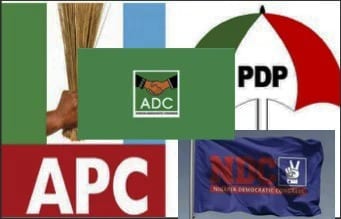
As preparations to create a unified front ahead of the 2027 general elections accelerate, opposition political parties and other political players under the G-100 platform are getting ready to meet in Abuja on August 18.The heads of six opposition parties—the African Democratic Congress, Allied Peoples Movement, National Democratic Congress, Peoples Democratic Party, Peoples Redemption Party, and Social Democratic Party—consulted with G-100 delegates before the conference was scheduled.The G-100 said it conducted talks with national chairmen, presidential candidates, and party running mates in a statement released on Monday and signed by Salihu Lukman.
The purpose of the secret sessions was to provide the political leaders a chance to talk about delicate topics and potential areas of cooperation without being subject to public scrutiny.
The group claims that the talks revealed an increasing awareness among the opposition parties that more collaboration would be required if they were to provide Nigerians a compelling alternative in 2027.
The G-100 recognized that the parties and their leaders would need to make concessions and set aside some personal political interests in order to achieve such collaboration.
According to the organization, the planned meeting would enable the parties to start in-depth talks about how they may cooperate and potentially develop a shared political platform or presidential candidate for 2027.
The G-100, however, stated that it would not decide how the talks would turn out or force any agreement on the parties involved. It stated that its purpose was to promote communication, foster trust, and establish a setting in which the parties may engage in unrestricted negotiations.The Ibadan Declaration, which urged opposition groups to investigate a viable path to fielding a single candidate against the ruling party in the 2027 presidential election, is also anticipated to be incorporated into the proposal.
The G-100 emphasized that political goodwill must now be transformed into a workable deal that all involved parties can accept, even tho the consultations had shown optimistic indicators of consensus.
It said the process would be inclusive and based on mutual respect, noting that sustainable cooperation could only be achieved when political parties voluntarily agree to work together.
As a number of political individuals and groups prepare for the 2027 elections, there is a fresh push for opposition unity. As a result, conversations about potential coalitions, power-sharing plans, coalition structures, and a shared presidential candidate have increased.
The G-100 contended that the opposition parties’ capacity to offer Nigerians a reliable alternative at the polls may be weakened by ongoing discord.
It argued that citizens must have a strong political alternative that can successfully compete for their votes in order for a democracy to be robust.
The group urged political leaders to show patience, bravery, and a readiness to make compromises, claiming that the current meetings were merely the start of what may turn out to be a protracted negotiation process.
Therefore, it is anticipated that the August 18 summit will offer the opposition parties a significant chance to shift from broad appeals for unity to talks on the specifics of a potential partnership in advance of the 2027 elections.
This event occurs when political parties continue to provide the Independent National Electoral Commission with information about their presidential candidates and running mates.