In a high-stakes legal confrontation that could reshape federal-state relations, Minnesota is challenging what it calls an overreaching federal immigration enforcement operation. At the center of the dispute is Operation Metro Surge, a massive deployment of Immigration and Customs Enforcement (ICE), Border Patrol and other federal agents to the Twin Cities under the Trump administration’s directive. Originally framed as a crackdown on undocumented immigration, violent crime and drug trafficking, the operation has instead ignited sharp constitutional and civil liberties questions.
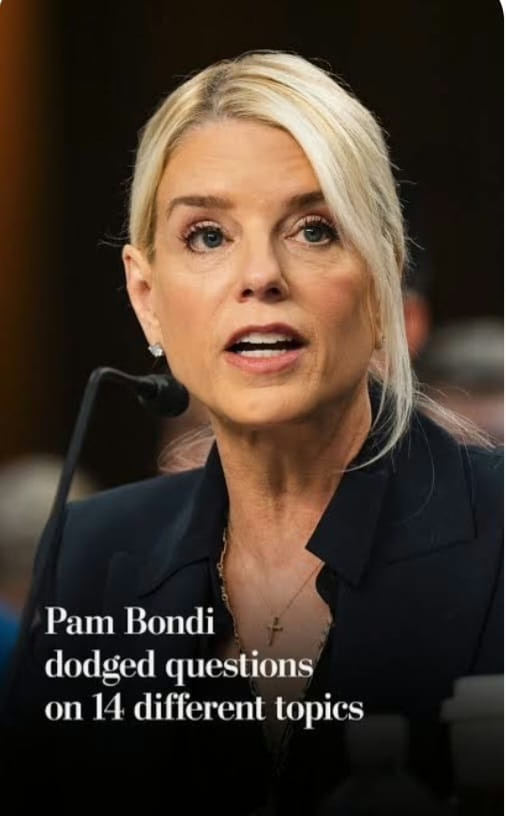
During a recent hearing, U.S. District Judge Katherine Menendez openly questioned the scope of federal authority, particularly in light of controversial conditions proposed by U.S. Attorney General Pam Bondi. In a letter to Minnesota Governor Tim Walz, Bondi linked the scaling back of federal actions to demands that include surrendering state voter rolls, Medicaid and food assistance data, and rolling back local sanctuary policies. The judge pressed legal counsel on whether there is any clear constitutional limit on executive power when enforcement actions are at issue.
The federal crackdown has already sparked widespread public outcry after it was linked to multiple shootings by federal agents, including the death of a Minnesota resident, intensifying local leaders’ calls for the withdrawal of the surge. State officials argue that the enforcement has failed to meet its objectives and instead created fear and instability, overwhelming local public safety efforts.
Minnesota’s legal team and civil rights advocates warn that unchecked executive action threatens the foundations of democratic governance by eroding civil liberties and undermining state autonomy. Meanwhile, federal attorneys defend the operation as lawful under immigration enforcement powers. Legal experts worry that conditioning federal cooperation on broad concessions could set a dangerous precedent for future federal-state conflicts.
As the case unfolds, observers see it as a pivotal test of constitutional limits on federal enforcement actions, with implications far beyond Minnesota for immigration policy, civil rights, and the balance of power in American governance.