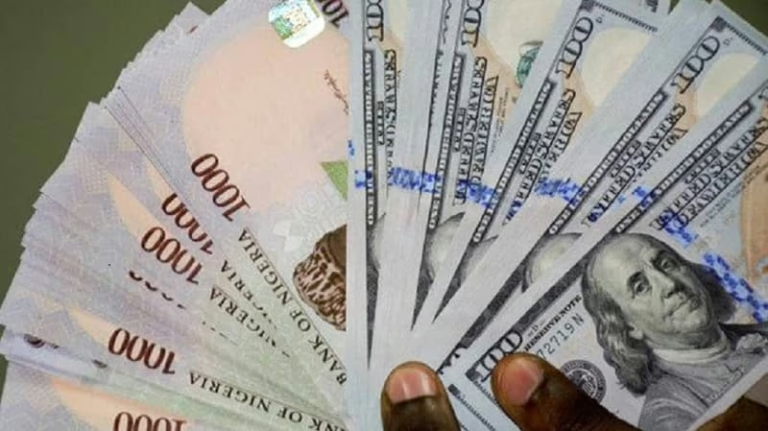

President Bola Tinubu has formally requested parliamentary approval for a substantial external borrowing plan totaling $21.5 billion, alongside €2.19 billion and 15 billion Japanese Yen. This move aims to address the economic challenges stemming from recent reforms, including the removal of fuel subsidies and the devaluation of the naira, which have led to heightened inflation and a cost-of-living crisis across Nigeria.
The proposed borrowing is part of a broader strategy to stimulate economic growth and stabilize the nation’s finances. However, concerns have been raised about the sustainability of Nigeria’s debt, with the total public debt stock already reaching ₦142.3 trillion as of September 2024. Experts warn that continued borrowing without effective fiscal management could exacerbate existing economic challenges.
The Lagos Chamber of Commerce and Industry (LCCI) has expressed alarm over the nation’s fiscal position, noting that the debt-to-GDP ratio exceeds 50%, and debt servicing costs threaten to surpass capital expenditure in future budgets. They advocate for transparency in the deployment of borrowed funds and recommend expanding the non-oil revenue base through tax reforms and the promotion of export-driven sectors.
In defense of the borrowing plan, some civil society organizations argue that the funds will support vital industries and infrastructure projects, potentially boosting revenue generation and economic diversification. They emphasize the importance of prudent financial management to ensure that the borrowed funds contribute positively to the nation’s development.
As Nigeria navigates these financial decisions, the balance between stimulating economic growth and maintaining fiscal responsibility remains a critical concern for policymakers and stakeholders alike.